

Notice the thought. Name the pattern.
A private journal for thoughts that won't let go. Write it down, name the pattern, find a more balanced view.

Why write it down
Thought records are a common exercise in cognitive behavioral therapy. beckit gives you a simple, private place to keep them.

Get it out of your head
A thought that keeps looping becomes a few sentences you can read, question and set down.
“They all think I’m not up to the job.”
- Catastrophizing
- Mind reading
- Fortune telling
- Labeling
- Should statements
Give the pattern a name
Calling it mind reading is a reminder that a thought is a guess, not a fact.
- Before
- 8/10
- After
- 5/10
See whether it helped
Rate the feeling before and after you weigh the evidence, and notice what changed.
Yours alone
A journal only works if you can be honest in it. beckit is built so you can.
How beckit handles your data- Only you can read your entries.
- No ads, no analytics cookies, no outside services.
- Download or delete everything whenever you like.
How an entry works
- Write it down
- What went through your mind, how it felt, and what was happening. A few words is enough.
- Name the pattern
- Pick any thinking traps that seem to fit. It's fine to leave them blank.
- Weigh the evidence
- Note what supports the thought and what doesn't, then try writing a more balanced one.
Tuesday at 9:40 PM
Presentation at work
What went through your mind
Everyone could tell I was nervous.
- Mind reading
- Mental filter
Emotion level 7/10
Evidence for
My voice shook during the first slide.
Evidence against
Two people said it was clear and asked follow-up questions.
A more balanced thought
I was nervous, and the presentation still landed. Nerves are not the same as failure.
Learn your own patterns
After a few weeks, beckit shows which traps come up most, and when, where and with whom. It describes your entries. It doesn't interpret them.
Mind reading
Concluding that someone is reacting negatively to you without checking it out.
What stands out
- Came up in 13 of your 40 entries in the last 90 days.
- Most often on Monday afternoons: 4 of 5 entries then.
- More often than usual in these places: Office.
- More often than usual with: My manager.
- Often alongside mental filter, in 7 of these 13 entries.
How often it came up
Entries per week, with mind reading highlighted.
- Mind reading
- All entries
Busiest week: 9 entries
Thinking traps you might recognize
These are common patterns described in cognitive behavioral approaches. Everyone falls into them sometimes. Naming one can make a thought easier to look at.
-

Catastrophizing
Exaggerating the importance or likely consequences of problems, or expecting the worst possible outcome.
-
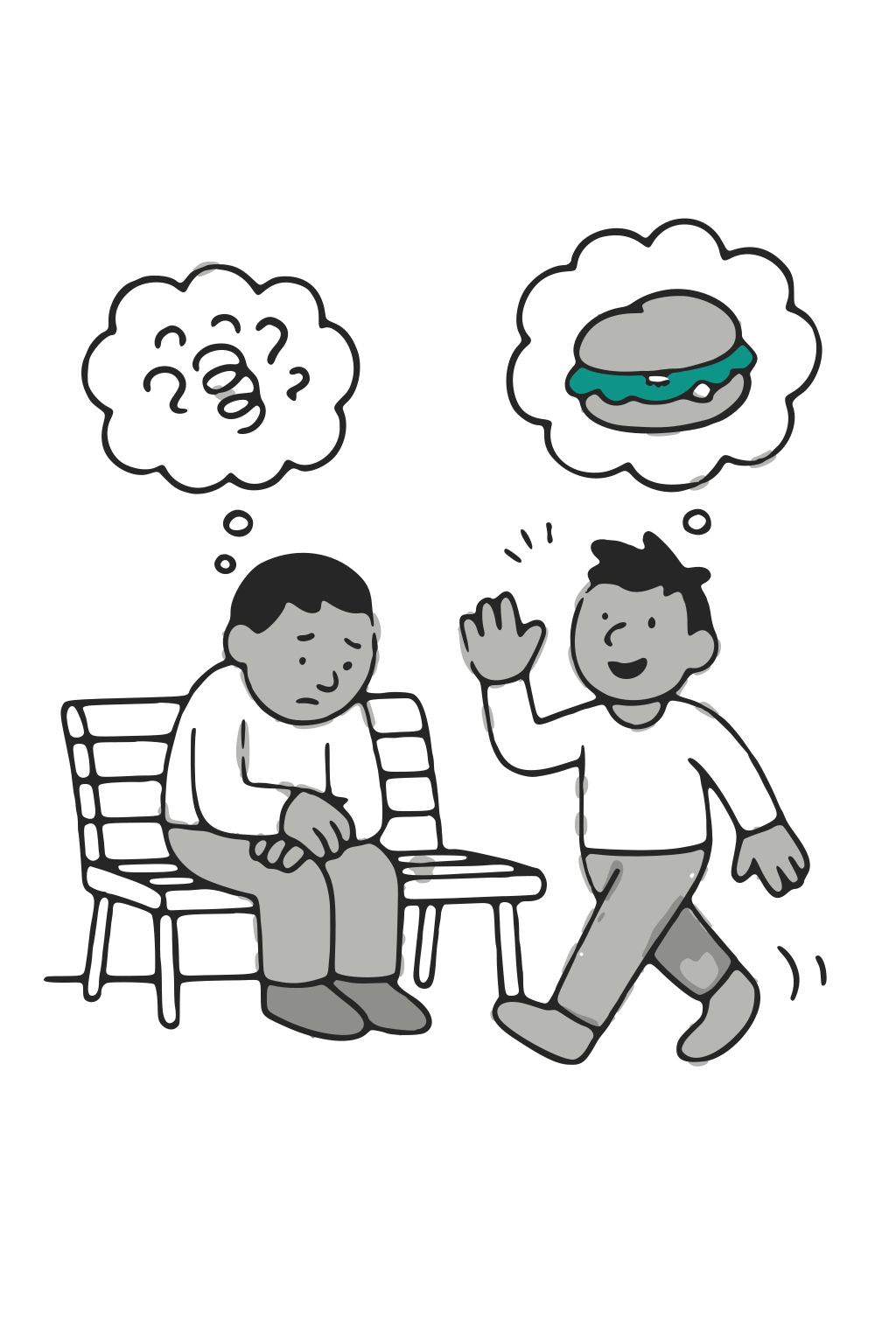
Mind reading
Concluding that someone is reacting negatively to you without checking it out.
-

All-or-nothing thinking
Seeing things in black-and-white categories; if a situation falls short of perfect, it is seen as a total failure.
What beckit is, and what it isn't
It is
- A private journal. Only your account can see your entries.
- A structured way to write down a hard moment.
- A way to notice which patterns come up over time.
It isn't
- Therapy, or a substitute for it.
- A diagnosis of any kind.
- Medical or mental health advice.
- A replacement for talking to a professional.
Start when you're ready.
Your first entry can be a single sentence about one moment from today.
Already have an account? Sign in